Amazon EC2 (Elastic Compute Cloud) is a foundational service in modern cloud computing. Introduced in 2006, it enabled developers to provision virtual machines on demand, shifting the industry away from physical servers and toward flexible, scalable infrastructure delivered over the internet. Over time, EC2 has expanded into a broad portfolio of instance families designed for general-purpose applications, high-performance computing, memory-intensive workloads, and GPU-based tasks.
As cloud adoption has grown, so have the baseline requirements placed on compute platforms. Organizations now evaluate providers based on factors such as ease of use, workload fit, global availability, predictable billing models, and support for emerging needs, such as AI/ML, container orchestration, and high-throughput data processing. In parallel, new cloud platforms and specialized compute providers have emerged, each offering its own strengths and ecosystem advantages. Let’s explore the top Amazon EC2 alternatives for your organization’s cloud computing needs.
Key takeaways:
-
Cloud compute platforms, including GPU and general-purpose virtual machines, provide scalable, on-demand infrastructure for AI/ML workloads, web applications, and high-performance tasks.
-
These platforms help teams accelerate development, deploy production-ready workloads reliably, and optimize costs with predictable pricing and integrated management tools.
-
When choosing an EC2 alternative, consider factors such as workload type (CPU-, memory-, or GPU-intensive), global data center availability, network latency, performance consistency, ease of scaling, and transparent pricing.
-
EC2 alternatives include DigitalOcean Droplets, Azure Virtual Machines, Scaleway, Vultr Cloud Compute, Oracle Cloud Infrastructure, Google Compute Engine, IBM Cloud Virtual Servers, and Hetzner.
What is AWS EC2?
Amazon EC2 operates on a modular compute architecture built around the AWS Nitro System, a combination of dedicated hardware and lightweight hypervisors that isolate compute, storage, and networking resources. This architecture minimizes virtualization overhead, provides hardware-level security boundaries, and enables features like high-speed network throughput, enhanced EBS performance, and support for bare-metal instances. Nitro also offloads management functions to separate hardware, providing EC2 instances with direct access to underlying CPU and memory resources.
Amazon EC2 key features:
-
Multiple instance families—including compute-optimized, memory-optimized, storage-optimized, and GPU-accelerated options—with configurable vCPU, memory, and networking profiles.
-
Advanced performance controls, including placement groups, instance store volumes, elastic GPUs, and customizable virtual networking.
-
Fine-grained tuning capabilities for workload-specific optimization across diverse application types.
-
Broad choice of instance sizes within each family, enabling right-sizing for everything from small prototypes to large-scale production systems.
-
High-throughput networking options, including enhanced networking and support for low-latency, high-bandwidth workloads.
- EC2 instances - $6.13/month for t4g.micro shared instance with two vCPUs, 1 GB RAM, EBS-only storage, and up to 5 Gbps network.
Need cloud infrastructure without the AWS complexity? Explore AWS alternatives that focus on streamlined workflows, clearer pricing structures, and a more opinionated set of features designed for common production use cases.
How to choose the right Amazon EC2 alternative
Selecting an Amazon EC2 alternative depends on finding alignment with your workload needs, operational goals, and cost expectations:
-
Workload fit and hardware availability: Identify the core compute requirements of your application, specifically, whether your workloads are CPU-intensive, memory-intensive, GPU-driven, or storage-optimized, and ensure the provider offers instance types that meet these specific demands.
-
Pricing model and cost predictability: Cloud providers vary widely in their billing methods, offering options such as hourly, monthly, or usage-based billing. Costs can extend beyond compute to include storage, network egress, IP addresses, and add-on services. Hyperscalers, in particular, offer expansive service catalogs, but this breadth can introduce operational and pricing complexity. In AWS environments, costs can vary significantly based on usage patterns, data transfer, and resource configuration, which often requires ongoing monitoring and cost-management tooling to avoid surprises.
-
Performance consistency and reliability: Check uptime SLAs, latency, and historical performance metrics to measure consistency and ensure stable operation under varying loads.
-
Regional presence and network reach: Assess the provider’s data center locations relative to your users, teams, and data residency requirements. A closer regional presence can reduce latency, improve response times, and help meet compliance mandates.
-
Ecosystem, integrations, and support: Consider how the platform fits with your development, deployment, and operations workflows. Investigate available APIs, integrations with other services, and access to enterprise or 24/7 support for troubleshooting and operational continuity.
Our AWS vs DigitalOcean guide compares how DigitalOcean’s unified interface for servers, networking, and databases reduces setup and maintenance overhead compared to AWS’s complex service catalog.
Top 8 EC2 alternatives to explore
Pricing and feature information in this article are based on publicly available documentation as of January 2026 and may vary by region and workload. For the most current pricing and availability, please refer to each provider’s official documentation.
Teams exploring EC2 often compare it with other compute platforms to find the right balance of simplicity, performance, and pricing. The top eight EC2 alternatives offer multiple ways to scale workloads and include options that help reduce operational complexity.
| Provider | Best for | Standout features | Pricing (monthly) |
|---|---|---|---|
| AWS EC2 | Flexible, scalable workloads | Wide range of instance types, placement groups, elastic networking, and GPU options for specialized workloads | $6.13/month |
| DigitalOcean Droplets | Digital-native enterprises | 99.99% SLA, flat pricing, multiple Droplet types, snapshots, block storage | 1 vCPU: $4.00/month |
| Microsoft Azure Virtual Machines | Enterprises & hybrid workloads | Compliance-certified, Azure ML automation, Office 365 integration | A-series: $11.68/month<br>B-series: $3.80/month<br>D-series: $41.61/month |
| Scaleway | Flexible European cloud VMs | AMD EPYC CPUs, dedicated cores, NVMe SSDs, rapid provisioning and resizing | €0.10/month |
| Vultr Cloud Compute | Fast, flexible VM deployment | NVMe storage, 25+ edge regions, transparent hourly billing, AI framework templates | $5.00/month |
| Oracle Cloud Infrastructure | Regulated, high-security workloads | Compute- and memory-optimized VMs, encrypted boot volumes, high availability, private networking | Dense I/O E5: $0.03/OCPU/hour; Dense I/O E5: $0.002/GB RAM/hour |
| Google Compute Engine | Flexible general-purpose VMs | Custom CPU, RAM, and storage, persistent disks, live migration, GPU options, Vertex AI and GKE integration | $6.11/month |
| IBM Cloud Virtual Servers | Hybrid-regulated and customizable | Custom CPU, RAM, and disk, bare-metal integration, hybrid cloud, compliance-ready | $53.29/month |
| Hetzner | Cost-efficient general-purpose VMs | 1–32 vCPU, 2–128 GB RAM, internal networking, resizable storage, high-performance networking | From $4.09/month |
1. DigitalOcean Droplets for digital-native enterprises
DigitalOcean Droplets are flexible virtual machines that support a wide range of use cases, from hosting websites and web applications to powering development and testing environments, databases, CI/CD pipelines, VPNs, proxies, game servers, and AI/ML workloads using GPU-optimized plans. DigitalOcean provides a cloud platform designed around common infrastructure workflows, enabling developers at digital-native enterprises to deploy and scale virtual machines using a focused set of tools and abstractions.
Droplets’ key features:
-
Globally distributed data centers ensure low-latency access and redundancy backed by a 99.99% uptime guarantee for dependable availability.
-
Manage Droplets using a web-based control panel, CLI, REST API, or Terraform Provider, supporting integration with existing development and infrastructure-as-code workflows.
-
Each Droplet includes a defined outbound data transfer allowance, with additional bandwidth available at published rates to support content delivery and application traffic.
-
Attach SSD-based Block storage for additional space or use Spaces Object Storage to store content in bulk.
- 1vCPU - $4.00/month with 500 GB transfer and 512MB memory with regular CPU
2. Azure Virtual Machine for enterprise and hybrid workloads
Microsoft Azure’s Virtual Machines, including the NCv3, NDv2, and NCads GPU families, deliver high-performance compute tuned for enterprises operating at scale. With strong interoperability across Microsoft’s ecosystem and a broad portfolio of compliance certifications, these instances are well-suited for organizations that must align with strict regulatory or hybrid-cloud requirements. Azure’s infrastructure also supports extending on-premises workloads to the cloud, making it easier for teams to modernize existing workloads. Azure Machine Learning introduces a managed layer for deploying and operating models across both CPU- and GPU-backed endpoints. This platform provides comprehensive MLOps functionality, covering training, versioning, orchestration, and monitoring, which enhances the underlying GPU capabilities and supports continuous, production-grade ML workflows.
Azure Virtual Machines key features:
-
ISO 27001, SOC 2 Type II, compliance certifications to support regulatory adherence.
-
Azure Machine Learning with MLflow integration and automated hyperparameter tuning.
-
Azure Arc hybrid cloud technology for consistent multi-cloud and edge deployments.
-
Native integration with Microsoft Teams, Power BI, and the Office 365 ecosystem.
Azure Virtual Machine pricing:
-
A series - $11.68/month
-
B series - $3.80/month
-
D series - $41.61/month
Learn more about Azure alternatives for a broader look at cloud platforms that support reliable scaling, global deployments, and an ecosystem of managed services without the overhead of large cloud tools.
3. Scaleway for flexible European cloud VMs
Scaleway offers virtual instances across several VM tiers, including Development, General Purpose, Compute-Optimized, and Memory-Optimized, allowing you to choose the optimal resource balance for your workloads. These instances support shared or dedicated vCPUs, flexible RAM and storage sizing, block storage, optional local NVMe volumes, private networking (VPC), flexible or dynamic IPv4, and fast provisioning. Scaleway makes VMs simple, scalable, and suitable for small hobby projects, standard web applications, CPU-intensive tasks, or memory-intensive databases alike.
Scaleway key features:
-
AMD EPYC-based x86 and ARM processors with options for dedicated physical cores to guarantee consistent compute performance.
-
Local NVMe SSD root disks with optional attachable block storage volumes for persistent or database-heavy workloads.
-
Rapid provisioning and flexible VM resizing, allowing workloads to scale up or down without downtime.
-
Network performance scales by instance type, from up to 1 Gbps for small VMs to multi-Gbps for high-end compute/memory VMs.
- Virtual Instances - €0.10/month for STARDUST1-S Development Instance with one vCPU, 1 GB RAM, and 100 Mbps bandwidth
4. Vultr Cloud Compute for fast, flexible VM deployment
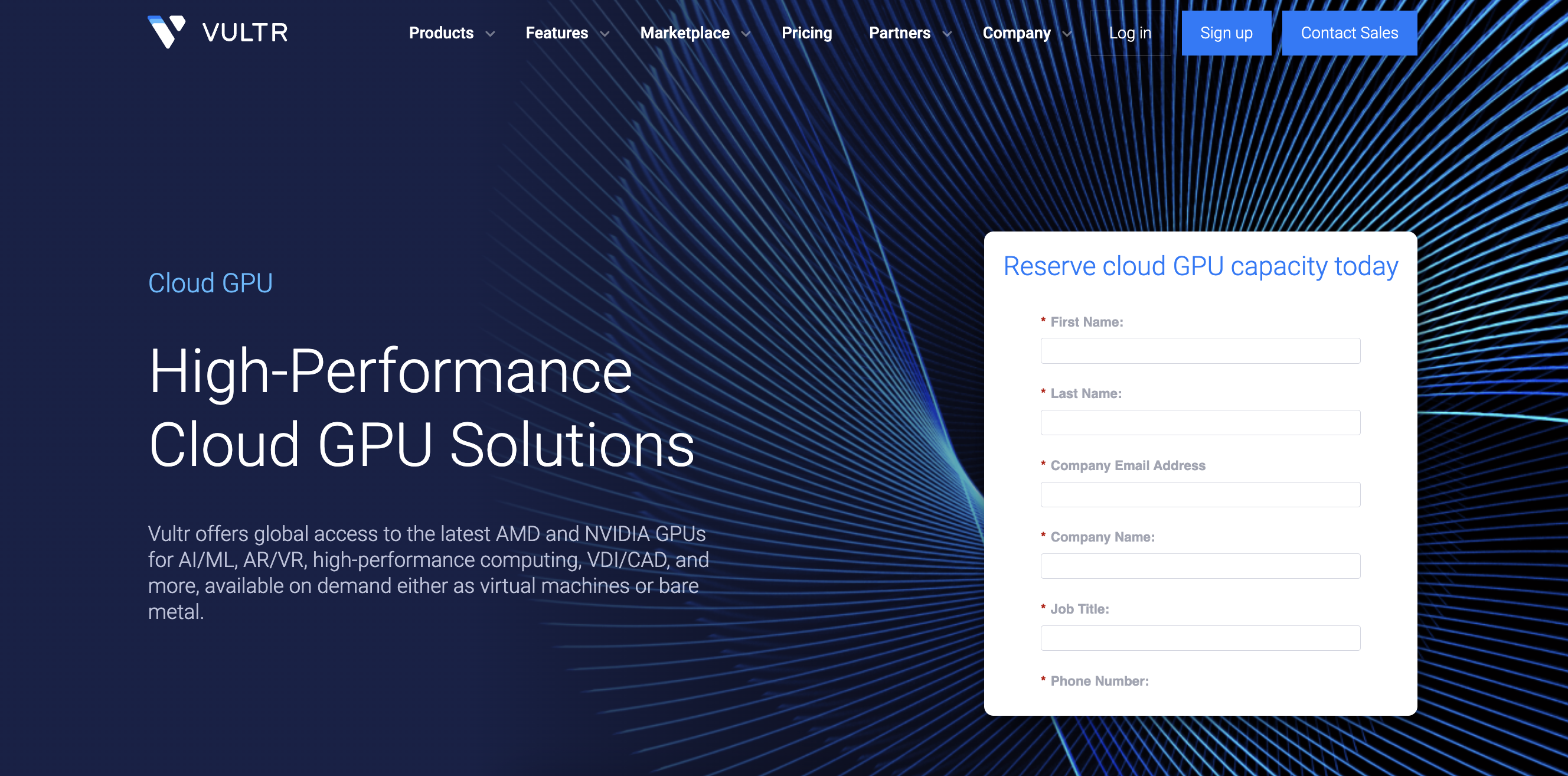
Vultr Cloud Compute provides high-performance virtual machines with fast, API-driven provisioning, making it suitable for developers and teams that need to deploy compute resources quickly and adjust capacity as workloads change. Its simplicity, flexible scaling, and transparent pricing enable users to launch VMs quickly and adjust resources as workloads evolve.
Vultr Cloud Compute key features:
-
Choose specific vCPU, RAM, and SSD combinations (1–32 vCPU, 1–128 GB RAM, 25–1600 GB NVMe storage).
-
Local NVMe drives optimized for databases, caching, and I/O-heavy workloads.
-
Schedule full VM snapshots and automated backups for disaster recovery.
-
Virtual machines are provisioned rapidly with automated operating system installation.
- $5/month for Shared CPU with 1 GB RAM, 1 vCPU, 25 GB SSD
If you find EC2’s learning curve steep, explore our Vultr alternatives guide for providers that emphasize focused dashboards, API-driven provisioning, and a narrower set of infrastructure primitives.
5. Oracle Cloud Infrastructure for a regulated high-security workload
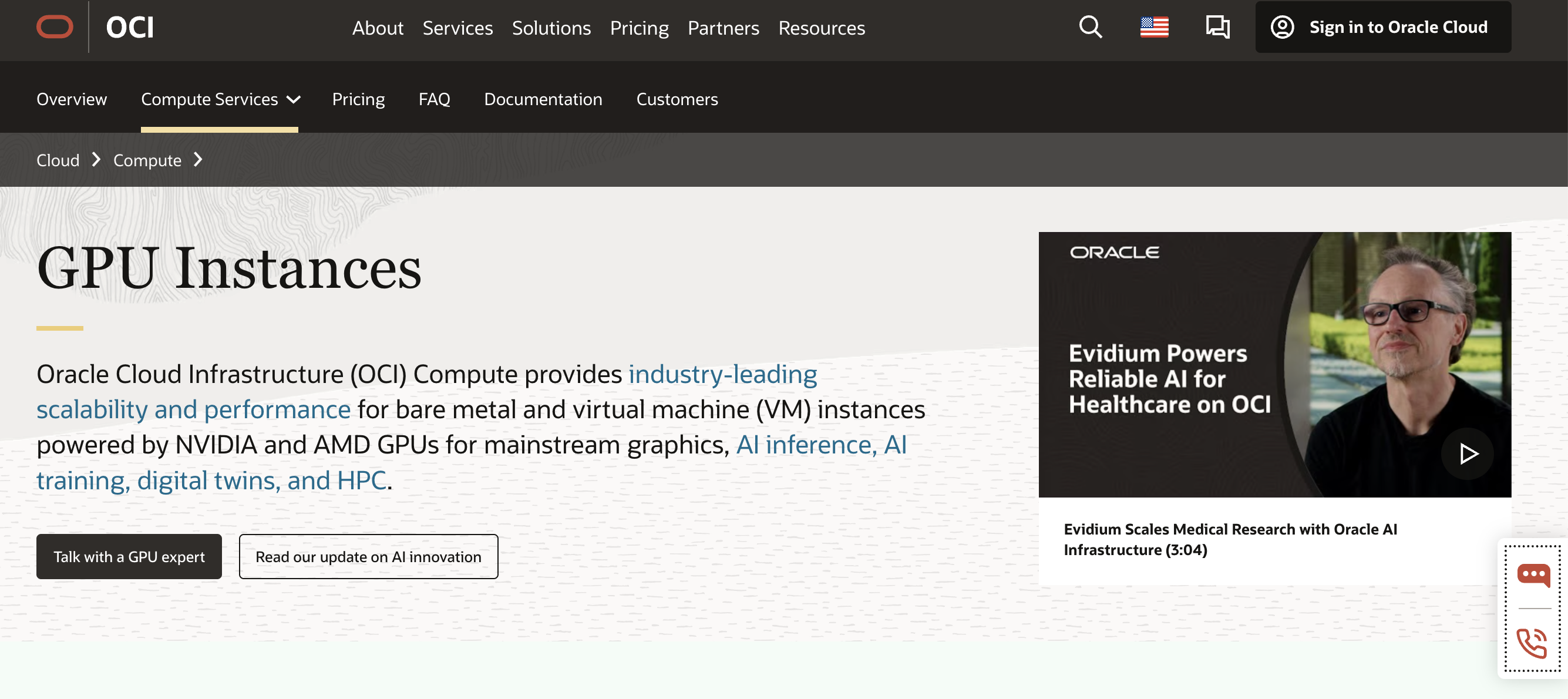
Oracle Cloud Infrastructure provides high-performance virtual machines optimized for secure, regulated workloads. OCI combines strong compute performance with enterprise-grade security, including built-in encryption and granular Role-Based Access Controls. Its VM offerings support mission-critical workloads for finance, healthcare, and government sectors while maintaining compliance with major standards such as ISO 27001, SOC 2, HIPAA, and PCI DSS. Additionally, OCI offers high-availability clusters and private networking to ensure reliability and secure connectivity for sensitive applications.
Oracle Cloud Infrastructure key features:
-
Standard, compute-optimized, and memory-optimized VM shapes tailored for web servers, databases, and analytics.
-
Boot volumes are encrypted by default with customer-managed keys.
-
High-availability clusters with automatic failover across fault domains.
-
Private subnets, VLANs, and public IP assignments with fine-grained firewall rules.
Oracle Cloud Infrastructure pricing:
-
Dense I/O E5 - $0.03 per OCPU/hour
-
Dense I/O E5 - $0.002 per GB RAM/hour
-
Dense I/O E5 - $0.0612 per TB NVMe/hour
6. Google Compute Engine for flexible general purpose VM
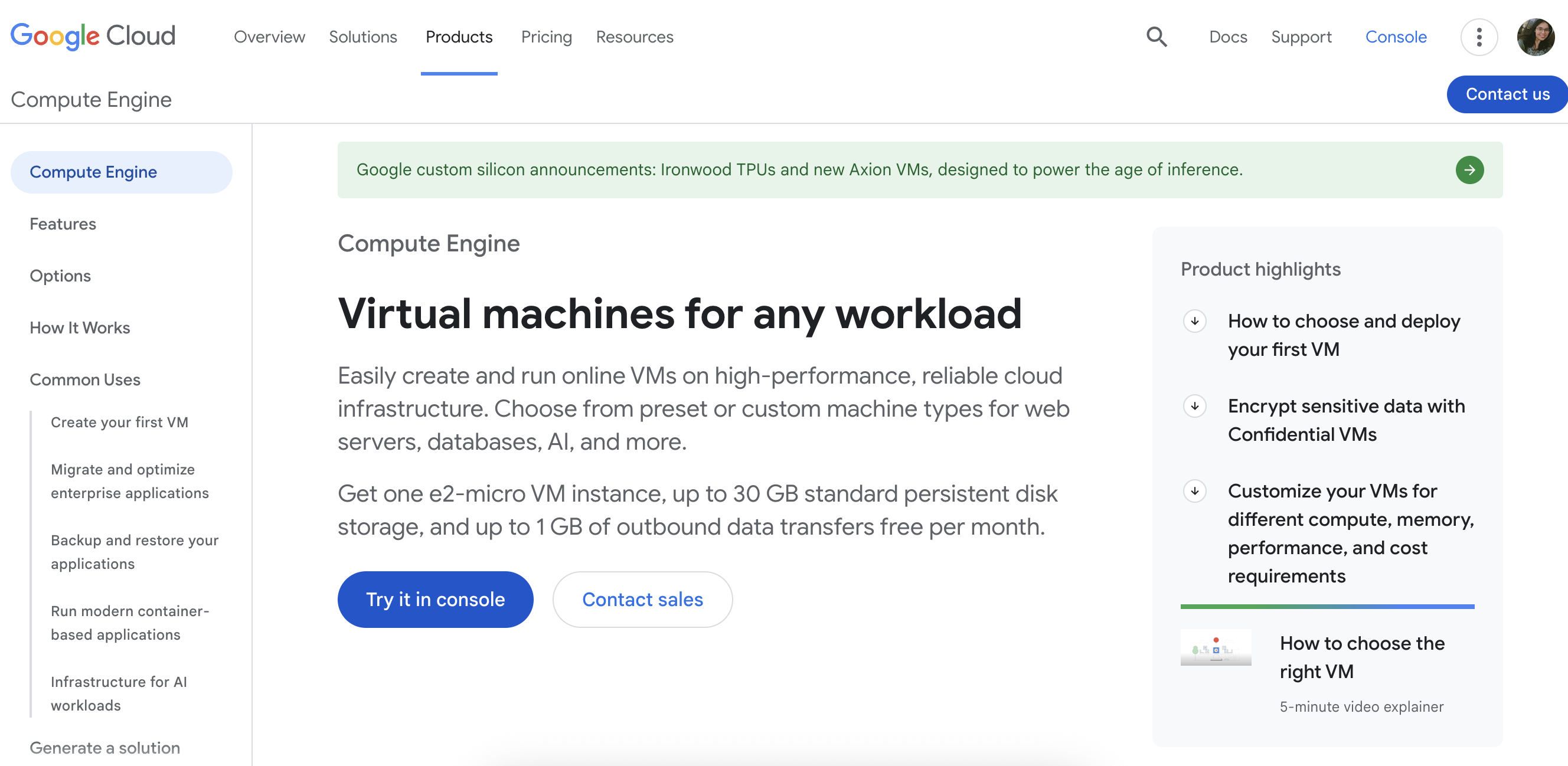
Google Cloud’s Compute Engine offers flexible virtual machines with customizable CPU, RAM, and storage configurations for a wide range of general-purpose workloads. These VMs include persistent disks, live migration, and integrated networking for reliable performance. For AI, ML, and high-performance computing workloads, NVIDIA GPUs, including GB200, B200, and H200, can be attached through accelerator-optimized machine families with pre-attached GPUs or added manually to general-purpose N1 instances.
Google Cloud Compute Engine key features:
-
Accelerator-optimized machine series (A2, A3, A4, G2) built with integrated GPUs for streamlined setup and performance tuning.
-
Flexible GPU attachment options, including T4, P4, P100, and V100, to N1 general-purpose VMs for customizable compute configurations.
-
Interoperability with Vertex AI, Google Kubernetes Engine (GKE), and Slurm-based pipelines for scalable training and deployment workflows.
-
Broad support for both predefined and custom VM shapes, enabling efficient resource allocation across diverse AI and HPC workloads.
Google Cloud Compute Engine pricing:
- Compute Engine - $6.11/month for e2-micro shared instance with 2 vCPUs and 1 GiB RAM
7. IBM Cloud Virtual Servers for hybrid-regulated customizable
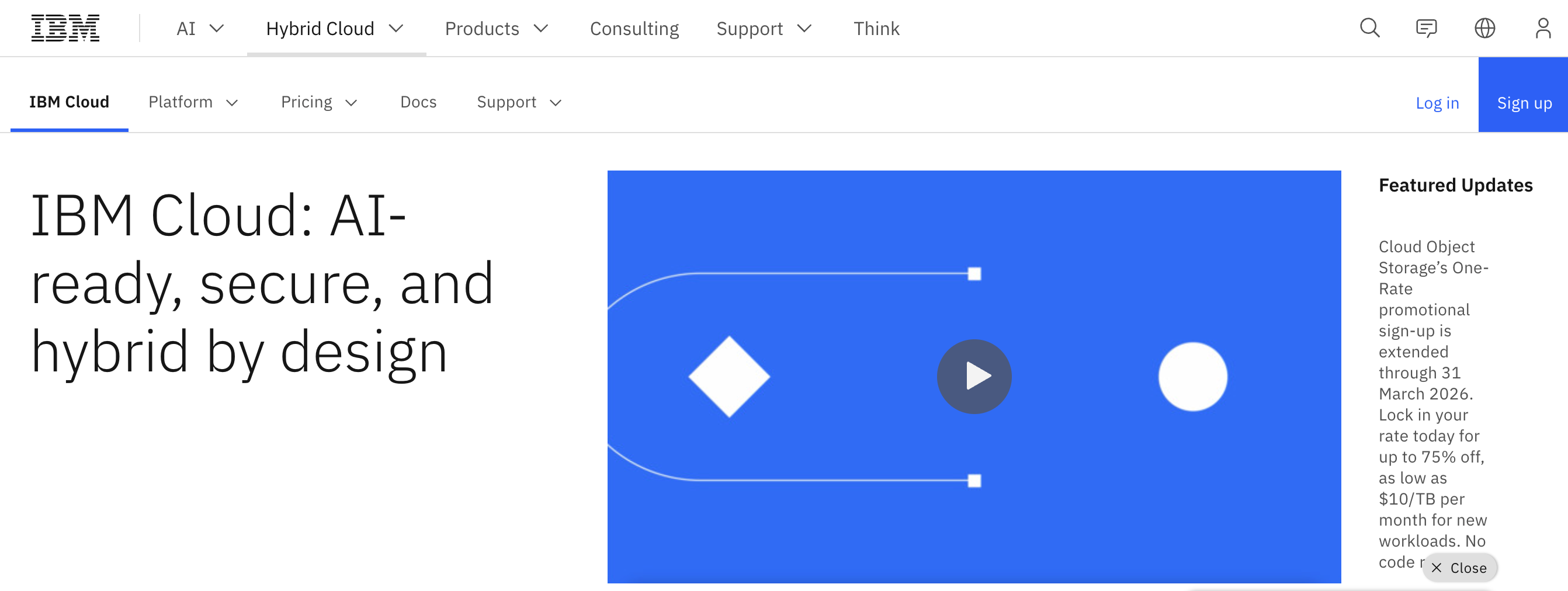
IBM Cloud offers virtual server instances with highly configurable CPU, RAM, and storage—suitable for a diverse range of workloads. Its VMs integrate seamlessly with hybrid environments via Red Hat OpenShift and support bare-metal instances for high-performance or compliance-sensitive tasks. Preconfigured compliance with PCI DSS, HIPAA, and GDPR makes IBM Cloud a suitable option for regulated industries. These features, combined with flexible VM shapes, make it a compelling alternative to AWS EC2 for enterprises seeking hybrid or highly customizable deployments.
IBM Cloud Virtual Servers key features:
-
Tailored CPU, RAM, and disk for workloads ranging from small apps to enterprise deployments.
-
Combine VMs with bare-metal servers for performance-sensitive workloads.
-
Connect VMs seamlessly to on-prem systems via Red Hat OpenShift or VPN.
-
Preconfigured for PCI DSS, HIPAA, and GDPR workloads.
IBM Cloud Virtual Servers pricing:
- $53.29/month for nxf-2x1 Flex instance with 2 vCPUs, 1 GB RAM, and 2 Gbps bandwidth
8. Hetzner for cost-effective general-purpose VMs
Hetzner offers reliable and cost-effective virtual machines and dedicated servers, specifically designed for startups, small teams, and developers who prioritize predictable performance. While not explicitly designed for high-end AI workloads, Hetzner VMs offer strong CPU performance, flexible storage options, and a straightforward environment suited for web applications, development servers, databases, and general-purpose compute tasks.
Hetzner key features:
-
CPX VMs from 1 vCPU/2GB RAM to 32 vCPU/128GB RAM with fixed monthly pricing.
-
Internal network IPs for secure multi-VM communication and private networking setups.
-
Flexible storage options to attach additional volumes or resize existing disks on demand.
-
High-performance networking with scalable bandwidth and multiple European data center locations for low latency and redundancy.
- $4.09/month starting for CX23 cost-optimized shared vCPU instances with 2 vCPUs, 4 GB RAM, 40 GB NVMe SSD, and 20 TB included traffic
Explore Hetzner alternatives to compare the affordability of top cloud platforms across features, performance, and global reach.
EC2 alternatives FAQs
What is the best EC2 alternative for AI/ML compute?
DigitalOcean Droplets offer GPU-optimized VMs, managed Kubernetes, storage, and networking for AI/ML experimentation and production. Oracle Cloud Infrastructure also supports high-performance GPU workloads; however, DigitalOcean offers simpler deployment and more predictable pricing.
Which EC2 alternative is most affordable for startups?
DigitalOcean Droplets start at $4/month with included bandwidth, offering low-cost, developer-friendly compute. Hetzner and Vultr are also cost-efficient, but DigitalOcean combines affordability with integrated services and global data center reach.
What providers offer developer-friendly virtual machines?
Providers offering developer-friendly virtual machines include DigitalOcean, Scaleway, Vultr, and Hetzner. These platforms provide straightforward VM provisioning, predictable pricing, easy-to-use interfaces and APIs, and features such as snapshots, block storage, and private networking that streamline development and testing workflows.
Are EC2 alternatives reliable for production workloads?
DigitalOcean Droplets deliver 99.99% SLA-backed uptime, globally distributed data centers, and managed Kubernetes. Oracle Cloud Infrastructure, Google Compute Engine, and IBM Cloud Virtual Servers also support production workloads; however, DigitalOcean combines reliability with simplicity.
How do EC2 alternatives handle bandwidth/egress fees?
Each DigitalOcean Droplet includes 500 GB of outbound transfer per month with predictable overage pricing. Hetzner and Vultr maintain simple bandwidth policies, while enterprise providers such as Oracle Cloud Infrastructure and Google Compute Engine may require reviewing network quotas for large-scale data movement.
Accelerate your AI projects with DigitalOcean Gradient™ AI GPU Droplets.
Accelerate your AI/ML, deep learning, high-performance computing, and data analytics tasks with DigitalOcean Gradient™ AI GPU Droplets. Scale on demand, manage costs, and deliver actionable insights with ease. Zero to GPU in just 2 clicks with simple, powerful virtual machines designed for developers, startups, and innovators who need high-performance computing without complexity.
Key features:
-
Powered by NVIDIA H100, H200, RTX 6000 Ada, L40S, and AMD MI300X GPUs
-
Save up to 75% vs. hyperscalers for the same on-demand GPUs
-
Flexible configurations from single-GPU to 8-GPU setups
-
Pre-installed Python and Deep Learning software packages
-
High-performance local boot and scratch disks included
-
HIPAA-eligible and SOC 2 compliant with enterprise-grade SLAs
Sign up today and unlock the possibilities of DigitalOcean Gradient™ AI GPU Droplets. For custom solutions, larger GPU allocations, or reserved instances, contact our sales team to learn how DigitalOcean can power your most demanding AI/ML workloads.
About the author

Surbhi is a Technical Writer at DigitalOcean with over 5 years of expertise in cloud computing, artificial intelligence, and machine learning documentation. She blends her writing skills with technical knowledge to create accessible guides that help emerging technologists master complex concepts.
Start building today
From GPU-powered inference and Kubernetes to managed databases and storage, get everything you need to build, scale, and deploy intelligent applications.